





Information


Business


Misc


Sciences
News
- New Scientist

- SciTechDaily
- Quanta Magazine
- Futura Sciences (in French)
Natural sciences
- A New Map of All the Particles and Forces: a succint presentation and visual model of the fundamental particles (of both fermion and boson types) and interactions (electromagnetism, weak and strong nuclear forces, Higgs field) described by the Standard Model
Social sciences
- Influencing
- Decision making
- Metamorphology: a nascent discipline concerned with the science of change (radical-change theory)
Dr James Wilk, whose work encompasses philosophy, psychology, social science and cybernetics, believes in minimalist interventions, which act as tipping points / nudges, to trigger instant and easy change – no matter how large or complicated the system. It can apply to both organisations or people. "Everybody's had experiences where they've had some big success in their life. They look back and realise it was down to one or two small things that they did. If they'd known to do them early on – one phone call, a dinner with one person – it would have saved a lot of effort. My point is, you can find those things in advance." Interchange Associates - Time perception
- Beauty is in the eye of the beer-holder...
- People helping animals are at the top of the scale of human needs
Book transcripts / notes

La symbolique chinoise
Jean Marolleau , 1978
The book has two main facets: a brilliant attempt at re-tracing the development of the Yin and Yang symbols as well as the derived diagrams of the Yijing / I Ching / Yi King (Classic of Changes) – dwelling on complex geometric and other mathematical properties – and a reflection on the ontology itself, with its broad concepts and principles, and the contrasts with Western thought. The notions of ambivalence, complementarity, transcendence of differences, perpetual transformation, etc. were so influential that they got integrated into Confucianism and Taoism on the one hand, and maintained a modern relevance in the West on the other hand, both in philosophy and natural sciences.
see notes (which exclude the mathematical considerations)
Life on the Edge – The Coming of Age of Quantum Biology
Jim Al-Khalili and Johnjoe McFadden, 2014
Presents the main characteristics of quantum physics (wave-particle duality, tunnelling, superposition, entanglement/nonlocality), some related concepts (coherence, measurement, quantum beating, inelastic electron tunnelling, spin states, double potential energy well, density functional theory, quantum Zeno effect), as well as several principles of classical physics & chemistry (transition state theory, kinetic isotope effect, wave interference, respiration, chirality), seen through the prism of particular biological mechanisms involving enzymes, photosynthesis, olfaction, magnetoreception, gene copying & reading, brain activity, and the hypothetical evolution of early life.Aside from the spectacular breadth and detail of its technical themes, this book is enriched with the history of relevant scientific developments.
see notes
Thinking, Fast and Slow
Daniel Kahneman, 2011
This book explores rationality and its limits, with a view to understanding and improving decisions in situations of uncertainty, such as planning or risk-taking. It exposes two dichotomies in the brain (intuitive versus analytical, and experiencing versus memory self), lists a number of judgement heuristics and cognitive biases to which they lead, presents utility and prospect theories, going as far as dissecting the concept of happiness.
see transcript/notes
The Two-Second Advantage
Vivek Ranadivé & Kevin Maney, 2011
Dwells on predictive models, both in the human brain and in computer systems, with very good insights into neurosciences and how machines can approach the capabilities of the human brain. The two-second advantage metaphorically refers to the ability of certain people or computer systems to predict what is going to happen a little better and faster than others.
see transcript/notes
Postcapitalism
Paul Mason, 2015
Very informative book on the different economic theories and the evolution of the modes of production since feodality and the Industrial Revolution. The author also points out the glaring limits of the current model, and explains the transition to the postcapitalist model. The discourse is very factual and uses variable geometry, dwelling for instance on sociology and technology (including IT).
see extensive transcript/notes
see alternative representation of the evolution
The Winner Effect
Ian Robertson, 2012
This book presents the way power affects the brain, how it drives behaviour, as well as some associated notions and effects such as cognitive dissonance, social threat, and the "winner effect". The phenomena described are relevant in a lot of situations and apply across species, which makes this book very useful as it explains people's behaviour according to this central dimension.
see transcript/notes
The Physics of Finance
James Owen Weatherall, 2013
More a book about physics-inspired models than finance (fortunately!), it presents a range of concepts and theories ranging from probability distributions to information theory, "sensitive dependence on initial conditions" (chaos theory), self-organised criticality, or gauge theory (used to provide a framework to deal with the index number problem. .).
see transcript/notes
Introducing Sociology
Richard Osborne, 1996
Sociology was invented as a means of thinking about (modern) society and human behaviour. Positivism, Marxism, functionalism, structuralism, symbolic interactionism, the Chicago and Frankfurt Schools... this book presents the different theories and concepts, following a logical and historial progression from the Great Enlightment to our postmodern, 'hyperreal' era.
see transcript/notes
The Business Brain book
Jan-Willem van den Brandhof, 1998
On the structure of the brain, the thinking process, intuition/lateral thinking, processing information/learning, stress, goal achievement...
see transcript/notes

Understanding Body Language
Jane Lyle, 1989
The basic principles of non-verbal communication – or "body language" – should be known and used for better understanding and communication.
This book dwells on postures, stress, social interactions, lie detection, orientation and love & attraction.
see transcript/notes
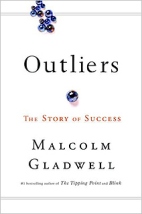
Outliers – The Story of Success
Malcolm Gladwell, 2008
The main theme of this book is the existence of patterns behind success, which are very weakly acknowledged. A sub-theme is the incidence of culture.
see transcript/notes
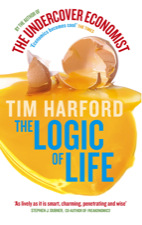
The Logic Of Life – Uncovering the New Economics of Everything
Tim Harford, 2008
In this book, Tim Harford applies rational choice theory (and game theory to a lower extent) to explore the hidden side of the economics/mechanisms in various fields, from gambling to sex, politics, urbanism or economic growth, with the goal to question conventional wisdom and unveil counter-intuitive forces at play.
see transcript/notes
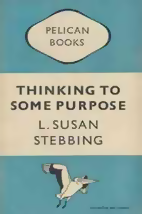
Thinking To Some Purpose
Lizzie Susan Stebbing, 1939
Described by the author as an argumentative book about arguing, this book presents some of the fallacies, deceptions and syllogisms which one can be confronted with, knowingly or not. Incidentally, it also unveils some curious characteristics of human nature — curious only if we forget that human beings are not for the most part rational.
see transcript/notes
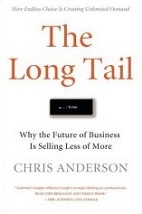
The Long Tail – Why The Future of Business is Selling Less of More
Chris Anderson, 2006
Our culture and economy are increasingly shifting away from a focus on a relatively small number of hits, star, mainstream products at the head of the demand curve, and moving towards a huge number of niches in the tail.
see transcript/notes


|